
Father's Day at The Rocks | 1st September 2024

Why Church?

We live in a generation more connected than ever, yet more isolated than ever before. In a world shaped by hyper-individualism, curated identities, and the pursuit of total autonomy, we’ve been taught that we can build our lives entirely on our own terms. And yet, beneath the noise of culture, career, and constant connection, there remains a deep ache to belong—to be known, to find community, and to be part of something bigger than ourselves.

This series explores the radical, counter-cultural community Jesus set in motion, challenging us to rethink the church not as a weekly event we attend or consume, but as a messy, beautiful, essential community where we are formed, challenged, and transformed together. Whether you’re sceptical of church or have grown comfortable in the routine, this series invites us to step out of isolation, rediscover the gift of belonging, and ask: why church?

Small Group Discussion Questions

Below you will find access to each week's discussion questions!
Week 1 | Why Worship?
--

Discussion Questions:

Week 2 | Why Bother?
Church can be messy, disappointing and sometimes downright frustrating—so why bother? Jesus never imagined the church as an event we attend or religious content we consume. He created a community of ordinary, imperfect people who would learn his way together and bring healing into the world. Rather than standing at a distance as critics, cynics or consumers, Jesus invites us to become contributors: people willing to show up, embrace the mess and help create the kind of community we wish existed.

Discussion Questions
  1. Why do you think we’re experiencing greater individual freedom and personal choice, yet so many people still feel lonely or disconnected? Could those things actually be related?
  2. Where have you experienced the good—and the messiness—of being part of a community?
  3. When something disappoints you—a workplace, friendship, church or organisation—are you more likely to criticise it, disengage from it, or try to make it better? Why?
  4. The message described three common postures towards church: Critic, Cynic and Consumer. Which are you most naturally drawn towards, and why?
  5. We tend to choose communities around compatibility—people who think, vote, live and believe like us. What do we gain from that, and what might it prevent us from becoming?
  6. How might relationships with people who are different from us, or even annoy us, actually contribute to our growth?
  7. What would it practically look like for you to move from consuming church to helping create the kind of church you want to see this week?
Week 3 | Why the Flock?
Calling people “sheep” doesn’t exactly sound like a compliment. In a culture suspicious of leaders and institutions, trusting anyone with influence over our lives can feel dangerous. Yet Jesus describes himself as the Good Shepherd: a leader who knows his people personally and gives his life for them rather than using them. The alternative to bad leadership isn’t complete independence. Jesus invites us out of spiritual isolation and into healthy community, where we can be known, protected, challenged and cared for under his leadership.

Discussion Questions:
  1. Who is someone you trust enough to take advice from even when you don’t like what they’re telling you? What earned that trust?
  2. Jesus contrasts the Good Shepherd with a hired hand. What qualities distinguish healthy leadership from unhealthy leadership?
  3. The message argues that complete independence can make us vulnerable rather than safe. Where have you seen that play out—in yourself or someone else?
  4. Where are you most tempted to say, “I can handle this on my own”? Where might you currently be calling something “independence” that is actually isolation?
  5. Who currently knows you well enough to notice when you’re drifting, struggling or making a bad decision—and do they actually have permission to say something? Is there a step you could take towards being more meaningfully known?
Week 4 | Why Give?
Most of life trains us to ask, “What do I get out of this?” Jesus invites us into something radically different: generosity towards people who may never be able to repay us. Giving isn’t about funding religious machinery or earning points with God. It’s one way the church makes the Kingdom of God tangible in our city. When followers of Jesus become rich in good deeds, generosity stops being something we talk about and becomes something our neighbours can actually experience.

Discussion Questions:
  1. Growing up, what did your family teach you about money—whether they meant to or not? What do you think has most shaped your attitude towards money and generosity?
  2. The message describes our default assumption as, “If it comes to me, it must be for me.” Where do you see that assumption operating most strongly in your life?
  3. Is generosity still generosity when we receive recognition, influence, tax benefits or a good feeling from doing it? Does motivation matter?
  4. Imagine someone who doesn’t believe in Jesus describing our church five years from now. What would you love them to say we have contributed to our city? What would need to be true of us for that to happen?
  5. What is one resource you currently have some margin in—money, possessions, skills, influence or time—and what could it look like to intentionally use some of that for somebody else?
Week 5 | Why Serve?
It’s easy to care about problems from a distance. Serving closes that distance. Jesus didn’t respond to human brokenness remotely—he came close, entered our mess and gave himself for us. Following him means learning to do the same. Serving isn’t about earning moral points or filling a volunteer roster; it puts us close enough to other people to replace assumptions with compassion. When we give our time and presence to people who can offer us nothing in return, they’re changed—and so are we.

Discussion Questions:
  1. Which feels harder for you to give away: your money or your time? Why?
  2. Can you genuinely love people while remaining comfortably removed from their suffering?
  3. The message says, “Mercy isn't just a warm feeling from afar; mercy is defined by how close you are willing to get.” Where does that challenge you?
  4. Jesus tells the disciples, “You give them something to eat.” What problems are we tempted to outsource to governments, charities or “someone more qualified” because getting involved would disrupt our lives?
  5. If serving changes the servant, what assumptions or prejudices might God need to confront in us by putting us in proximity to people unlike us?
  6. Who are the people whose struggles you currently know mostly from a distance? What could moving one step closer actually look like?
Week 6 | Why the Bride?
We spend enormous amounts of energy trying to prove that we matter—through achievement, relationships, money, status and approval. But none of those things can ultimately tell us we’re deeply known and wanted. The Bible’s surprising picture of the church as Jesus’ bride tells a different story: Jesus loves imperfect people before they’ve cleaned themselves up, and commits himself to making them new. Church is the messy place where we learn to receive that kind of love—and practise giving it to one another.

Discussion Questions:
  1. What’s the difference between changing yourself because you’re afraid you won’t be accepted and changing because you know you’re already loved?
  2. If someone says, “I don't care what anybody thinks about me,” is that genuine freedom—or can indifference itself become another defence mechanism?
  3. The message acknowledges that the real church can look very different from a “radiant bride”. How do you hold together the beauty Jesus intends for the church and the very real failures of Christians?
  4. Can unconditional love genuinely change someone, or does meaningful change require consequences, expectations and discomfort too? How do those things coexist?
  5. The message says Jesus knows our worst and still moves towards us. What part of yourself do you find hardest to believe could be fully known and still fully loved?
Week 7 | Why the Family?
We all want somewhere we can stop performing and simply belong. Yet many of our relationships remain conditional: we belong while we’re useful, successful, fun or convenient. Jesus offers something deeper. He doesn’t simply give people a new belief system; he brings them into a family where their place at the table is received, not achieved. That kind of belonging calls us beyond casual attendance into real responsibility for one another—being known, carrying burdens and building a community where people don’t disappear when life gets hard.

Discussion Questions:
  1. Where do you feel pressure to maintain a particular version of yourself in order to belong? What makes you feel like you genuinely belong somewhere rather than simply being included?
  2. Have you ever experienced a friendship or community becoming distant when your circumstances changed or you were no longer as “useful”? What did that teach you about belonging?
  3. Can you have deep belonging without obligation? Or does genuine belonging necessarily mean other people eventually get to inconvenience you?
  4. Church calls people “family”, but families can also be dysfunctional, controlling and unsafe. What should distinguish healthy spiritual family from unhealthy enmeshment?
  5. If belonging means “your burdens become partly my responsibility”, whose burden are you currently willing—or unwilling—to carry? Why?
  6. Is there someone in our community whose burden you could practically help carry right now? What might that look like?
Week 8 | Why the New Humanity?
Our culture is getting very good at teaching us whom to dislike. Politics, algorithms and tribal identities encourage us not merely to disagree, but to treat people on the other side with contempt. Jesus offers another way. At the cross, he tears down the walls that divide us and creates what Paul calls a “new humanity”—people whose shared identity in Jesus is bigger than everything that separates them. The church should become living evidence that genuine disagreement doesn’t have to end in hostility, and reconciliation is actually possible.

Discussion Questions:
  1. What topic do you find people seem almost incapable of discussing well at the moment?
  2. What’s the difference between strongly disagreeing with someone and holding them in contempt?
  3. When does tolerance become avoidance? Is peacefully staying away from people we disagree with actually reconciliation?
  4. Where do you notice algorithms, media or your social circles encouraging an “us versus them” mentality in you?
  5. What kind of person do you instinctively struggle to imagine genuinely following Jesus? What does your answer expose about your own picture of who belongs?
  6. Is there anyone you need to forgive who may never apologise, change or agree that they hurt you? What does reconciliation mean when restoration of the relationship may not be wise?
  7. What is one relationship in your actual life where making peace would cost you something? What might taking the first step look like?

More Resources

Bible Reading Plan - Main Focus
“I believe in God in my own way, I don’t need a church. Can’t I just worship God in the comfort of my own home or out in nature?” These thoughts are common in our modern world. But there is blessing being part of the body of Christ; join us and explore some reasons why Christians should definitely be joined to a community of believers.

Additional Bible Plans

Read through each week's devotion guides on the Bible App - be sure to add The Rocks as your church in the Bible app to get notified each week. There are permalinks to each one below.
Jesus is building His Church - an organization that does not belong to any man. But what exactly is the Church all about? As we look at God’s Word this week, we will discover more about what Jesus is building and why it matters!

There might be a reason you sometimes wonder why Christians go to church. Maybe church was never meant to be just another place to go. Whether you’re worn out by church or wondering where you fit, it’s a great time to see what the Bible says about being the Church. 

Read More

The below books would be what we recommend to do a full deep dive into everything we are tracking with on Sundays. They are below in order of complexity.
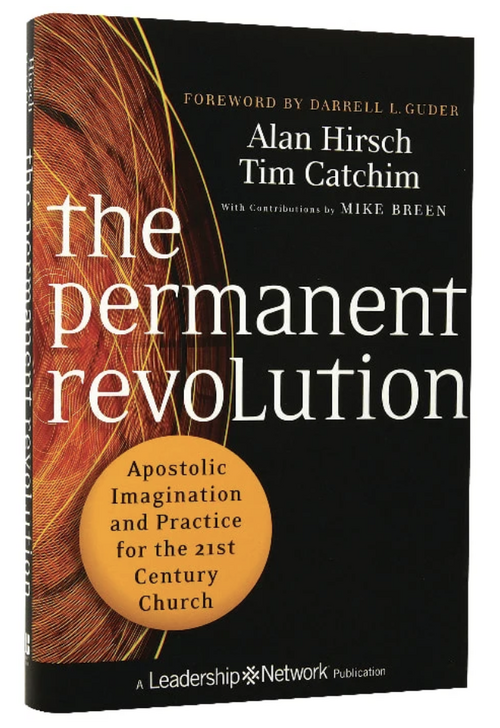
The Permanent Revolution

Alan Hirsch
The Permanent Revolution is a work of theological re-imagination and re-construction that draws from biblical studies, theology, organizational theory, leadership studies, and key social sciences. The book elaborates on the apostolic role rooted in the five-fold ministry from Ephesians 4 (apostles, prophets, evangelists, shepherds, and teacher), and its significance for the missional movement. It explores how the apostolic ministry facilitates ongoing renewal in the life of the church and focuses on leadership in relation to missional innovation and entrepreneurship. The authors examine the nature of organization as reframed through the lens of apostolic ministry. 
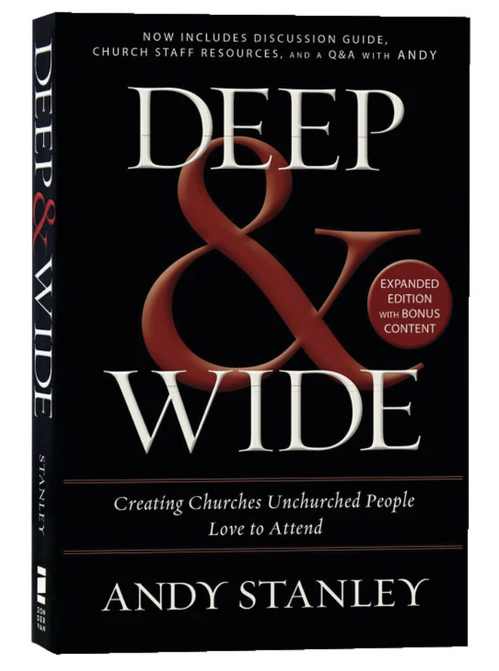
Deep & Wide

Andy Stanley
This isn't a book about how to make your church bigger. This is a book about how to make your church more appealing to the people who don’t usually—or have never—gone to church. Deep and Wide provides church leaders with an in-depth look into North Point Community Church and its strategies, its goals, its methods, and its story. You'll learn how to create a church that unchurched people absolutely love to attend. 
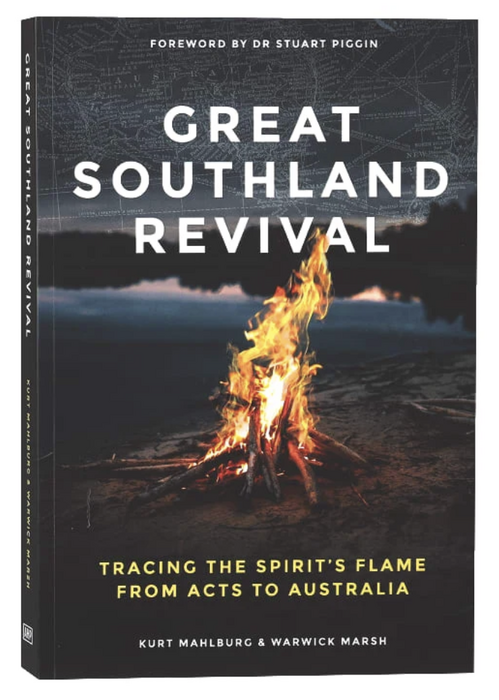
Great Southland Revival

Kurt Mahlburg
Australia is a nation forged in the furnace of revival. Long forgotten, Australia's Spirit-filled history comes to life in Great Southland Revival. Discover how the flame of Pentecost spread from the book of Acts all the way to the South Pacific. Journey on convict ships and city trams, to goldfields, outback communities and far-flung islands transformed by the gospel. Most of all, be inspired that God longs to revive the church, sweep multitudes into His kingdom, and renew our world once again.

Study More

Some of us may be at a point where want more structured theological discourse around these topics. Below you will find resources from a free online seminary that will be helpful. A seminary is simply a Christian university that focusses on theology and ministry.

What is the Church?

The first step in developing healthy leaders is to be a healthy church. This means you have to decide what type of church you want to be. Dr. Breshears will help you think through what being a biblical church looks like.
Watch More

The below content would be what we recommend to do a bit more viewing around these ideas.

What is the purpose of the church?

Got Questions Ministries

The New Humanity • The New Kind of Existence We're Invited To

BibleProject

Who Needs Church?

Andy Stanley